
Contents
Can you 3D print sex toys? Yes, you can, but printing a toy and printing a safe toy are two entirely different things. Before you fire up your machine, it’s worth understanding the health risks of raw plastics, the limits of home 3D printing, and which materials may be better suited to the finished product. This guide explores those concerns and outlines a more cautious approach to the process.
Please remember that nothing here replaces tested, body-safe products. Making your own gear carries risks, so hygiene matters if you want to protect your health while having fun. Your safety should come first.
Can You 3D Print Sex Toys?
Back in the early 2010s, the idea took off. Sites popped up with free designs, custom shape generators, and startup pitches that promised we’d all be printing our own gear at home before long. The appeal was obvious: you could tweak every dimension to fit you, avoid stepping into an adult store, and keep the whole process private. For a while, it looked like the future of custom pleasure.
Then the practical problems became harder to ignore. As this deep dive into 3D-printed sex toys explains, early excitement ran into some stubborn physical and material limits: 3D-printed sex toys and their porosity problem. You can print the shape—no question about that—but the object that comes off your build plate isn’t necessarily ready for use on the body. Much of the concern comes down to how 3D printing works at a microscopic level and what the material was actually designed to do.
Can You 3D Print Sex Toys Safely?
You can lower some of the risk with the right method. Still, a printed part used directly on the body raises questions about its surface, material, and how thoroughly it can be cleaned.
Why Printed Layers Trap Bacteria
Every printed layer leaves small gaps. Most aren’t visible, and soap and water may not reach deep inside them. That gives germs places to remain even when the toy looks clean.
Rough surfaces create another problem. Small ridges can rub against the skin, causing irritation or small scrapes. Once skin is damaged, it’s more vulnerable to infection.
Why Common Filaments Aren’t Skin-Safe
PLA and ABS are the plastics most home printers use. They’re made for hobby parts and prototypes, not automatically for intimate contact. The nozzle, dyes, and additives can introduce further variables, too.
Even a certified material doesn’t settle the question. Regulators consider the finished product and how it was made. In the U.S., the FDA clears finished devices, not raw materials. So a filament with a “food-safe” label doesn’t automatically make a printed toy body-safe.
Why Sanding and Sealing Falls Short
Some makers sand a print and spray on a sealer. It may seem like an easy solution, but it isn’t dependable. One 3D printing news site calls this method unsafe.
Sanding smooths the outside without necessarily closing deeper pores. Coatings can also wear down, crack, or peel with use. Once that happens, you’re back to dealing with the original printed surface.
So if you’re asking whether you can 3D print sex toys safely by printing and sealing, that approach isn’t something I’d rely on for intimate use. The more cautious option is to use the print as part of a mold-making process instead.
What Is the Safest Material to 3D Print Sex Toys?
For the workflow in this guide, the better choice is a fully cured, platinum-cure silicone casting made from a printed mold or master—not a toy printed directly from a household machine. Look for a silicone whose supplier provides documentation for the intended kind of body contact. “Medical-grade” on a listing is a claim to check, not a safety guarantee.
Properly cured silicone can give you a smooth, flexible, nonporous surface that’s easier to wash than a layered print. That doesn’t make every finished casting safe, though. A tear, trapped bubble, sticky area, or poor design can still be a problem.
Here’s how common options compare:
- Cast silicone: The preferred option for this DIY workflow when the grade, cure, and finished surface are suitable for the intended use.
- TPE and TPU: Properties vary by formulation and process. Don’t assume a flexible printed material is nonporous or suitable for intimate contact; ask for relevant test documentation.
- PLA and ABS: Not recommended for direct use as home-printed intimate toys.
- Printing resin: Not recommended as a directly used toy unless the specific finished print has evidence for the intended contact and has received all required cleaning and post-curing. A resin suited to one type of skin contact isn’t automatically suited to internal use.
How to Check Material Claims
Start with the exact product name, not a broad label like “body-safe silicone.” Read the supplier’s safety data sheet, or SDS, for handling hazards, mixing precautions, and other chemical information. Then check the technical instructions for the mix ratio, cure time, and any required post-cure. An SDS helps you handle a material; it doesn’t prove that your finished toy is safe for intimate use.
Ask what a claim actually covers. “Phthalate-free” refers only to the absence of a specific group of chemicals; it does not guarantee surface quality or overall suitability. “Biocompatible” is more useful when a supplier can show what was tested, in what finished form, and for which type and length of contact. ISO 10993 biocompatibility standards are discussed in medical-device material selection, but a mention of the standard alone isn’t a test report for your homemade toy. The FDA likewise considers biocompatibility in relation to the final form and nature of contact.
How to 3D Print a Sex Toy
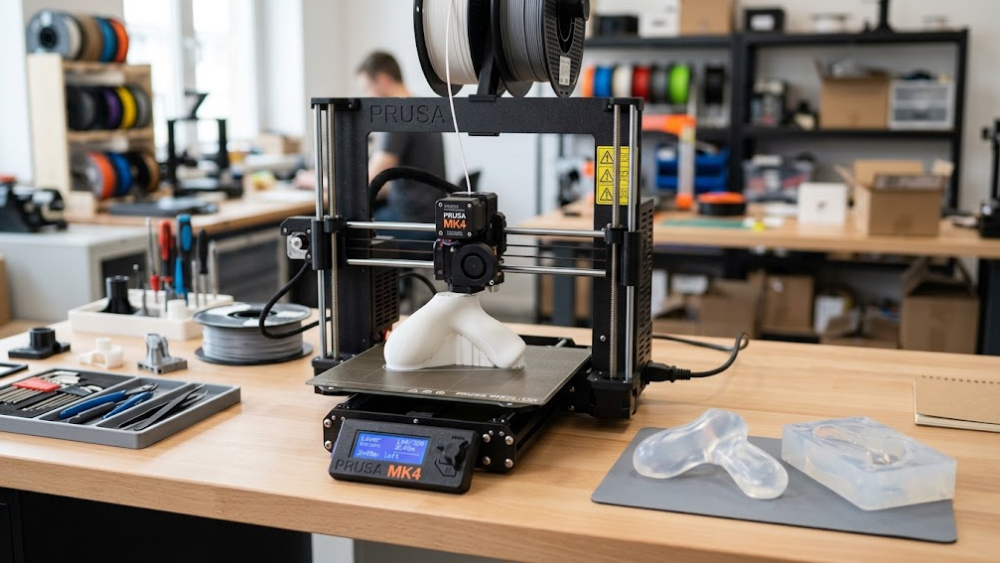
The safer workflow involves using the printer to make a mold rather than using the printed object itself. The mold gives the final material its shape.
If you’d rather skip the printer entirely, try these safe DIY sex toy ideas instead. If you want to proceed with a printed mold, follow these steps carefully. Shortcuts can create problems later.
- Design or choose a model. Pick a shape that features smooth curves. Avoid any design with sharp edges or sudden drops. If you plan to make a product for anal use, you must include a flared base. For an example of a properly designed flared base, see these silicone butt plugs. The flare helps prevent the item from being pulled completely inside the body, making it an important safety feature.
- Print a master model or mold. You will print the shape out of standard hard plastic. Keep this printed part clearly separate from the final product. This rigid plastic piece is used only to shape the liquid silicone and will not come into direct contact with your body.
- Smooth the master. Sand and seal the printed plastic mold. The goal is a clean, smooth surface because bumps on the mold will transfer to the final silicone piece. Work carefully, as the mold’s finish will affect the quality of the final piece.
- Cast with body-safe silicone. Mix your platinum-cure silicone according to the package directions. Pour it slowly into your prepared mold and follow the manufacturer’s mixing ratios and cure times. Pouring carefully can also help reduce trapped air bubbles.
- Demold and inspect. Open the mold once the recommended cure time has passed. Check the item carefully under a bright light. Discard anything that shows bubbles, tears, or rough spots rather than trying to use it anyway.
- Wash thoroughly. Before using the finished item for the first time, wash it thoroughly with warm water and mild soap. This removes dust or residue left over from the molding process.
Safety Checklist Before You Use a Homemade Toy
Go through this list every time—not just once—before using anything you’ve made:
- ✅ Verified the silicone’s safety data sheet and followed cure instructions exactly
- ✅ Inspected closely—no cracks, bubbles, sticky spots, or rough edges
- ✅ Matched your lube to your material: silicone lube can damage silicone toys, so stick to water-based unless the manufacturer confirms compatibility
- ✅ Washed and fully dried after every use
- ✅ Reviewed our full routine: how to clean sex toys covers every material and situation
- ✅ Stopped use immediately if you feel stinging, burning, unusual warmth, or discomfort
Disclaimer: This guide is for educational purposes only and does not constitute medical or professional advice. Everyone’s body reacts differently; when in doubt, stick to products made and tested specifically for intimate use.
When Buying a Tested Toy Makes More Sense
Casting takes time, tools, and practice. One small mistake can leave a bubble or a rough spot. You also can’t test a homemade toy the same way a factory can.
A store-bought toy has fewer unknowns. Fleshline shares product test reports on its homepage, so you can look at the paperwork yourself.
If you like unique shapes, you don’t have to make them from scratch. A fantasy silicone dildo gives you a bold, custom-style look without the guesswork.
Final Thoughts on 3D Printing Sex Toys
Yes, you can 3D print a sex toy’s shape. For a home project, printing a master or mold and casting the final piece in suitable, fully cured silicone is the more cautious route than using a bare print. Good material paperwork, a sound design, and careful inspection still matter.
If you’d prefer a ready-made option, explore Fleshline’s range to find a shape that suits your preferences.
FAQ
Is It Safe to Use 3D-Printed Plastic for Adult Toys?
Generally, no. Printed plastic can have small gaps and rough areas that are difficult to clean thoroughly, and many common printing materials aren’t intended for intimate contact. The hard surface can also create friction and irritation. Silicone casting from a printed mold is a more cautious route.
What Are the Best Body-Safe Materials for Homemade Sex Toys?
Platinum-cure, medical-grade silicone is a commonly preferred choice for this type of DIY project when the material is suitable for the intended use and properly cured. Because TPE and TPU properties vary by formulation, don’t assume that a flexible printed material is nonporous or suitable for intimate contact.